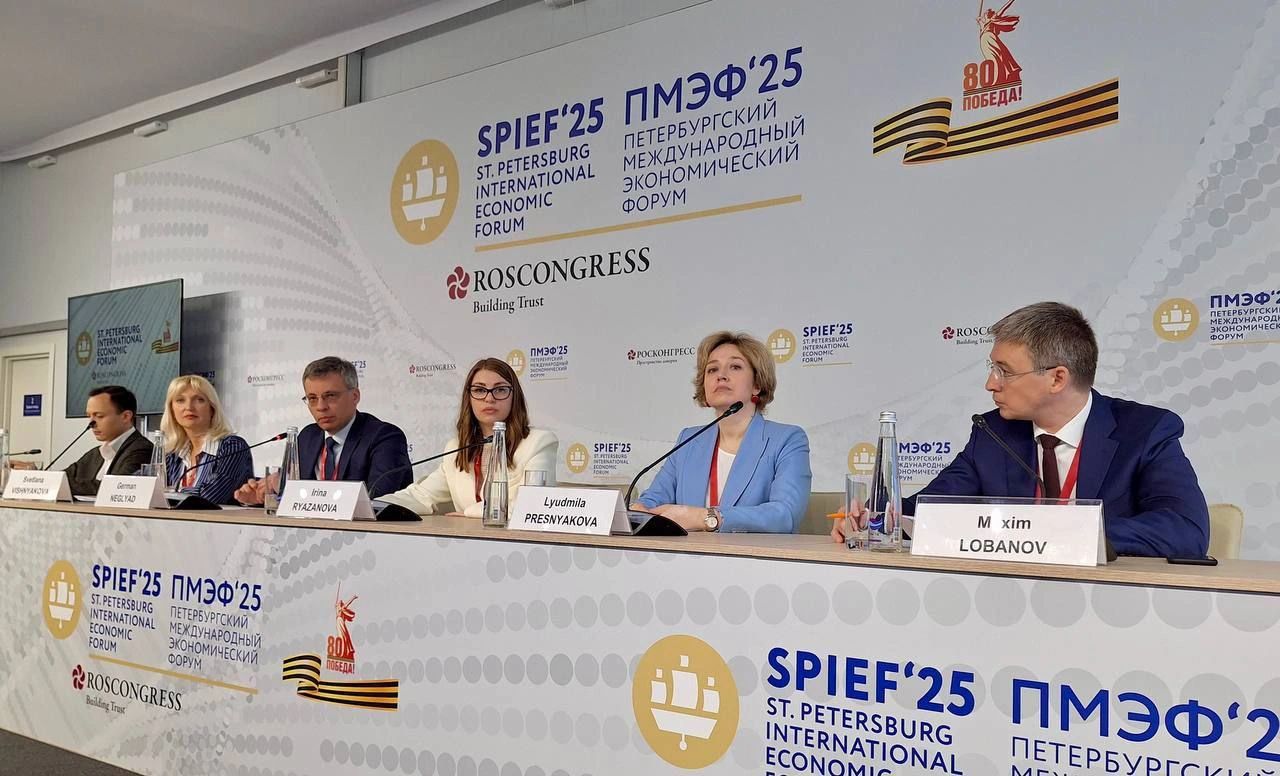
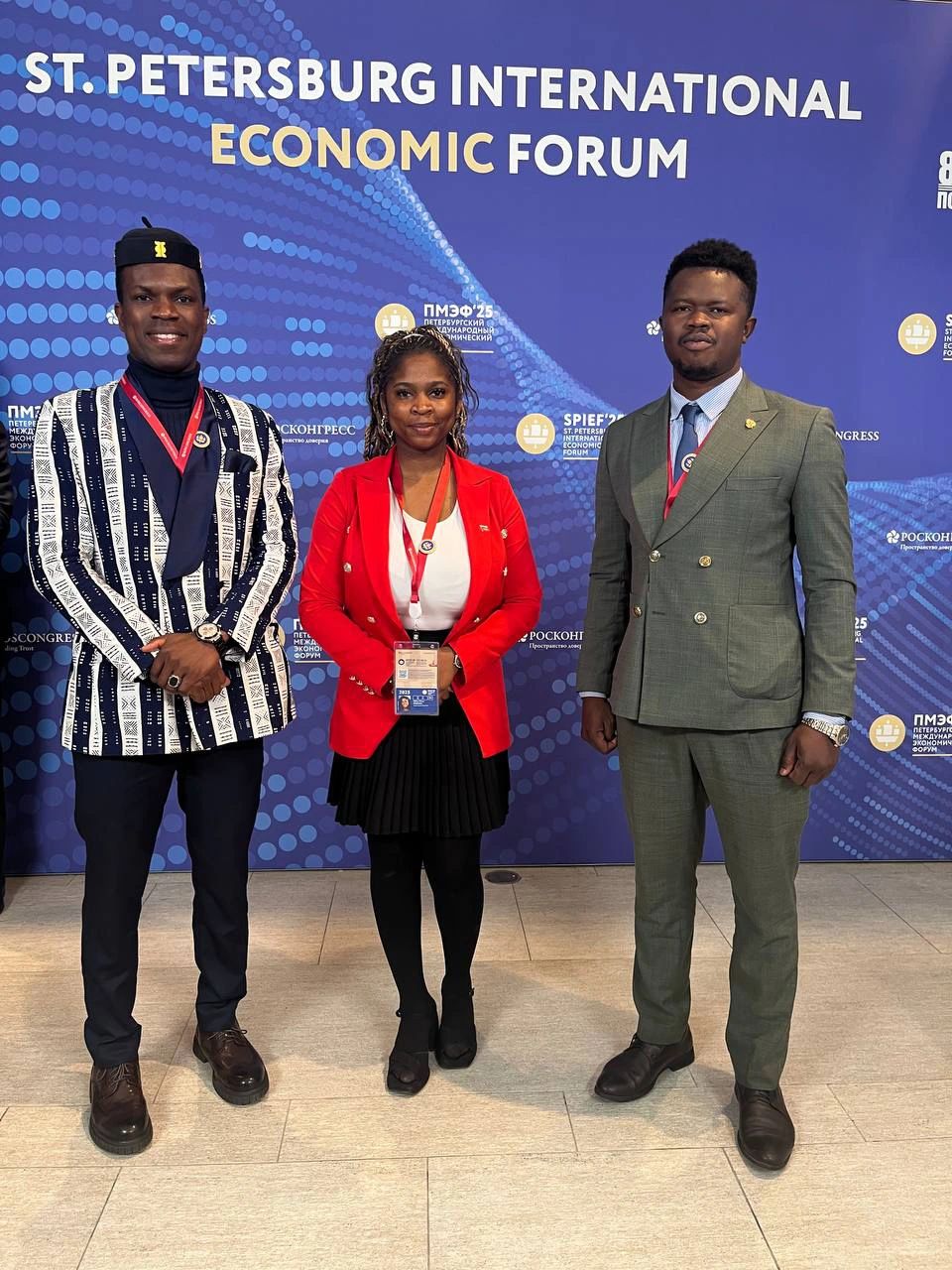
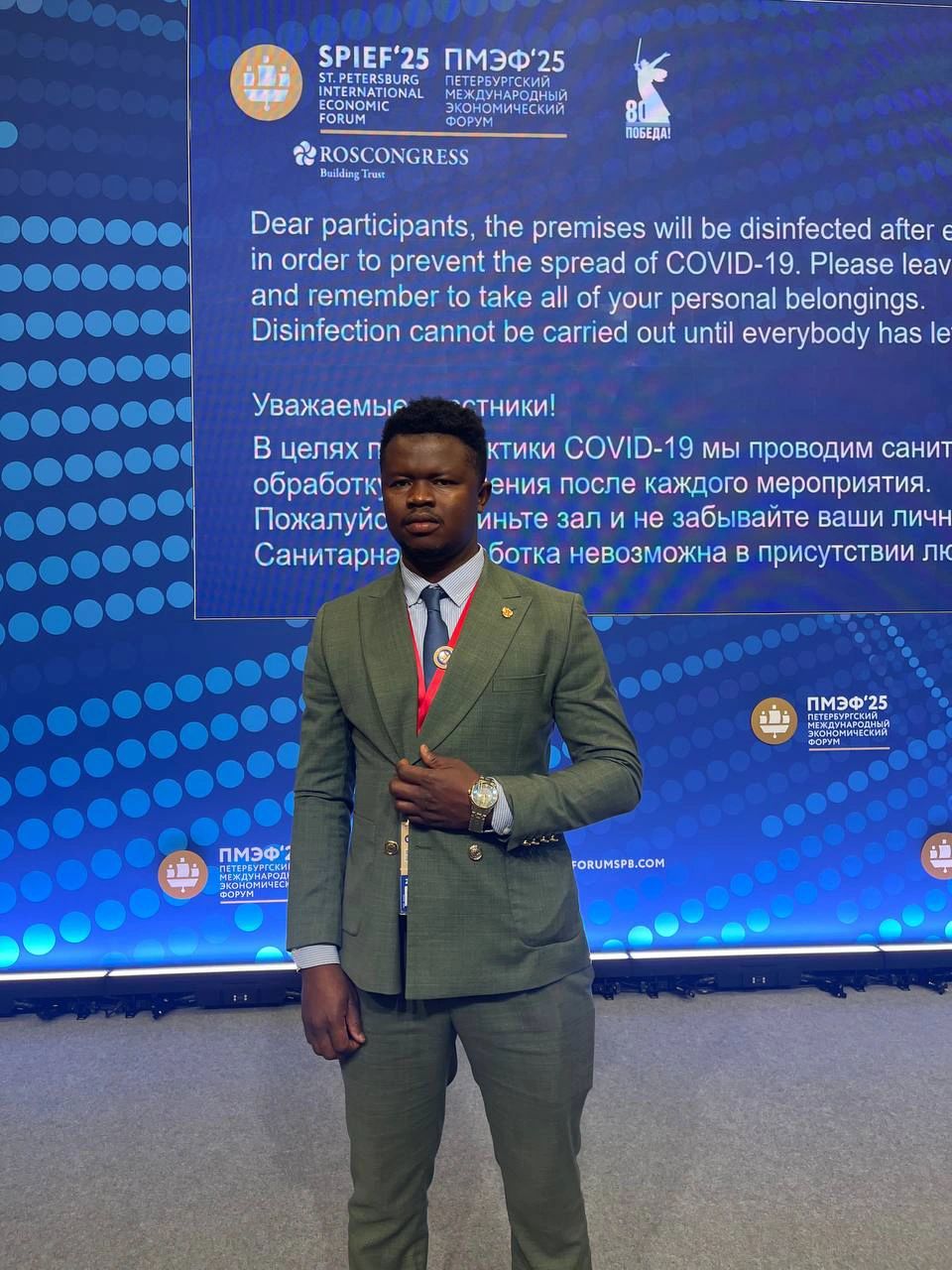
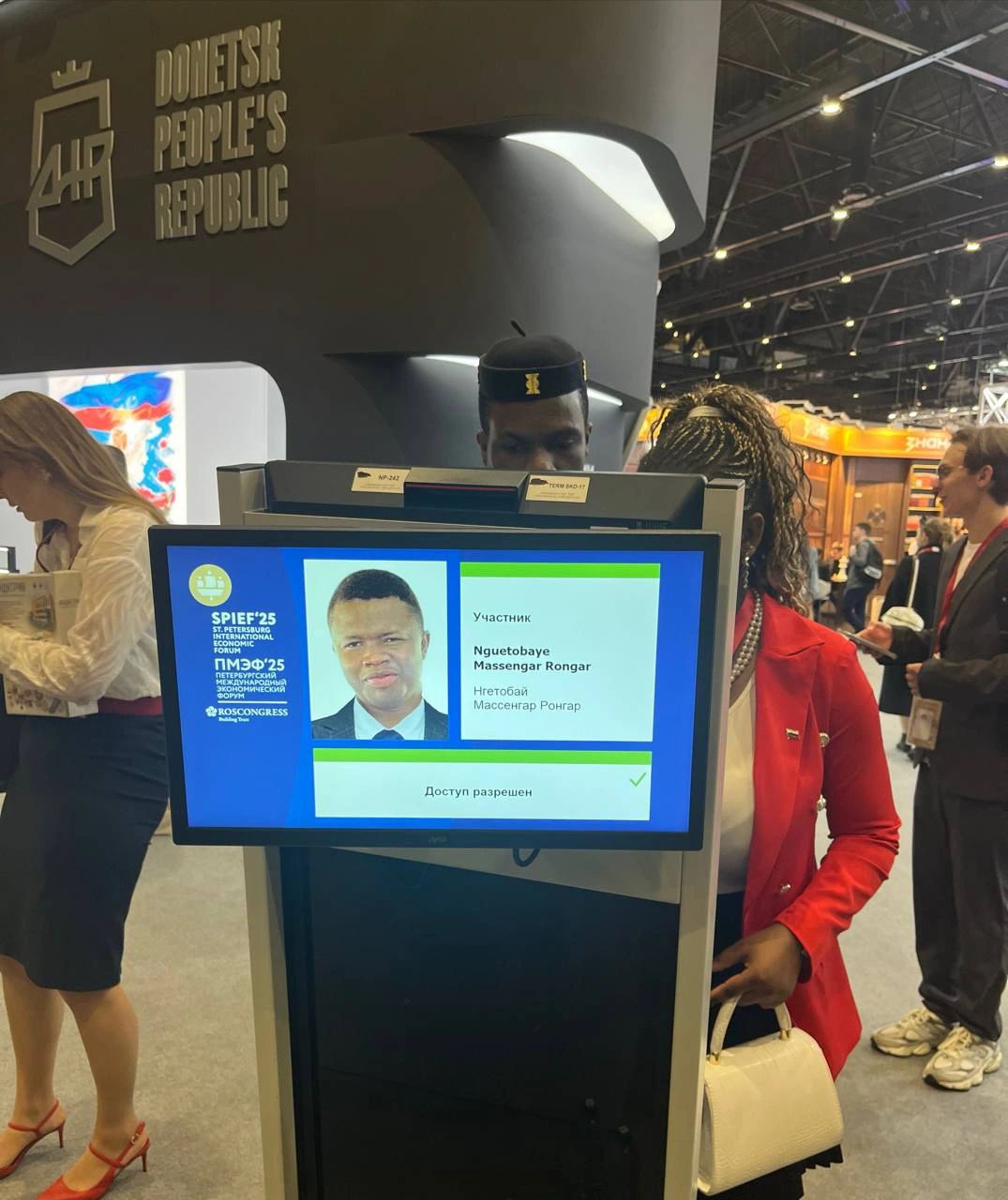
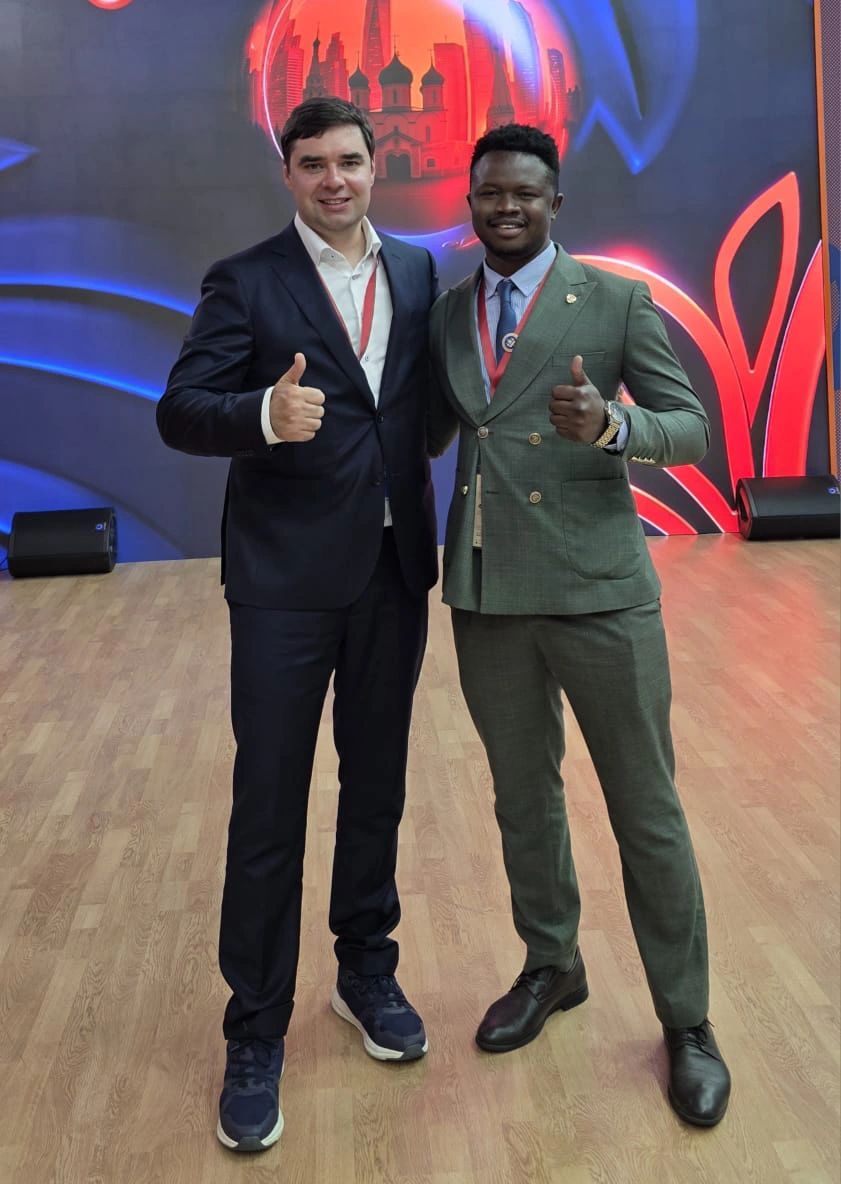
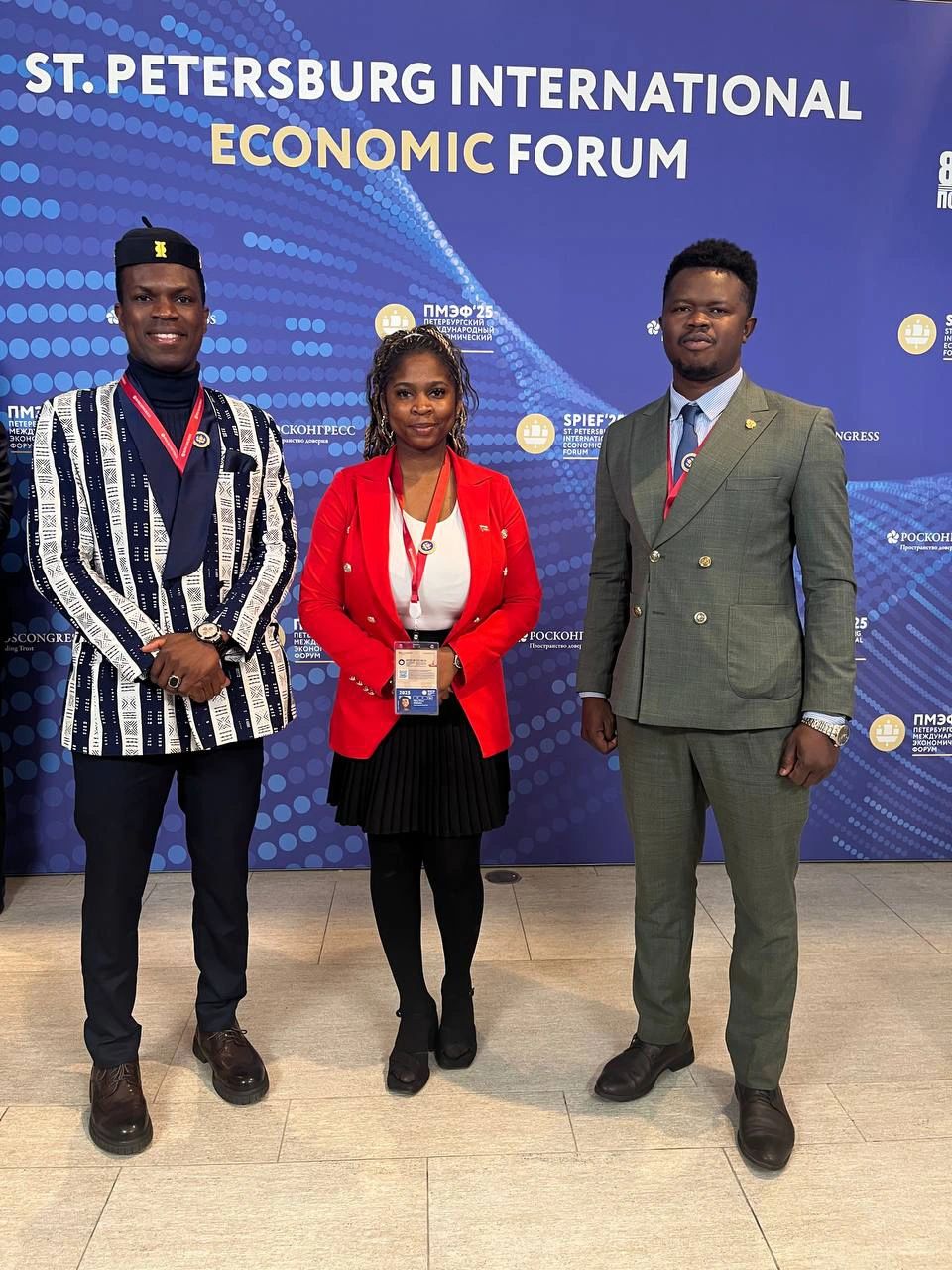
From June 18 to 21, 2025, I participated in the St. Petersburg International Forum alongside my banking colleagues. This participation represents one of the most significant moments in my professional journey in 2025, offering me the unique opportunity to take part in one of the world's most influential and prestigious economic forums. The St. Petersburg International Forum, often compared to the World Economic Forum in Davos, has established itself over the years as an essential platform for international economic dialogue, particularly for emerging countries and nations seeking alternatives to traditional global economic governance structures.
My presence at this forum as a representative of the banking sector and a specialist in economic relations between Russia and Africa allowed me to actively participate in discussions on the future of international financial cooperation. Accompanied by my colleagues from the Russian and international banking sector, I was able to contribute to reflections on the ongoing transformations in the global financial system and the opportunities they create for emerging economies.
This large-scale event brought together nearly 180 countries, with the eminent presence of President Vladimir Putin himself. The scale of this participation testifies to the growing importance of the St. Petersburg Forum as a platform for multilateral dialogue at a time when traditional structures of international cooperation are being questioned and new geopolitical alignments are taking shape. The presence of delegations from almost every continent Asia, Africa, Latin America, Europe, the Middle East, and Oceania created a truly global environment for exchanges and negotiations.
The presence of President Vladimir Putin added a particular dimension to this event. His keynote speech, followed attentively by thousands of participants, outlined the broad strokes of the Russian vision for the future international economic order, addressing crucial issues such as de-dollarization, alternative payment systems, economic sovereignty, and multipolarity. The opportunity to hear directly the perspectives of the Russian leader on these strategic issues, in a context where Russia plays an increasingly central role in reconfiguring the global economic architecture, was extremely instructive.
Beyond the presidential address, Putin's presence at several plenary sessions and roundtables allowed for direct exchanges between the Russian head of state and business leaders, bankers, ministers, and heads of state from other nations. These interactions provided valuable insights into the priorities of Russian economic policy and the partnership opportunities Russia seeks to develop with different regions of the world.
We exchanged views on a diversity of strategic topics. The thematic richness of the forum reflected the complexity of contemporary economic challenges and the increasing interconnection between different areas of economic activity. The discussions covered a remarkably broad spectrum of issues, all essential for understanding the ongoing transformations in the global economy and identifying opportunities for cooperation and investment.
One of the central themes of the forum was the transformation of the international financial system and the development of alternatives to US dollar-dominated payment and settlement mechanisms. Sessions dedicated to this topic explored ongoing initiatives to create regional and bilateral payment systems, the increasing use of national currencies in international trade, the potential role of central bank digital currencies (CBDCs), and multilateral clearing mechanisms that could reduce dependence on the SWIFT system.
As a banking professional specifically working on Russia-Africa relations, I actively participated in discussions on alternative payment systems for trade between these regions. The practical challenges related to sanctions, banking restrictions, and fund transfer difficulties have created a particular urgency for developing innovative solutions. Exchanges with African, Russian, Chinese, Indian, and other countries' bankers allowed for the identification of promising approaches, including the increased use of national currencies, the development of regional digital payment platforms, and the establishment of bilateral credit lines that bypass traditional systems.
Economic and trade cooperation between Russia and the countries of the Global South constituted another major axis of discussion. Several sessions were specifically dedicated to Russia-Africa, Russia-Latin America, and Russia-Asia relations. These sessions explored opportunities in various sectors such as agriculture, energy, mining, infrastructure, technology, and of course, the pharmaceutical industrymy main area of expertise.
Discussions on the pharmaceutical sector were particularly relevant for my work at Pharmasyntez. The forum hosted several roundtables on health security, pharmaceutical independence, and cooperation opportunities in medicine production and distribution. The COVID-19 pandemic highlighted the vulnerability of many developing countries to their dependence on pharmaceutical imports, creating increased awareness of the need to develop local and regional production capacities.
I had the opportunity to present Pharmasyntez's experience in developing partnerships with African countries, including technology transfers, training of local personnel, and the establishment of production lines in several countries on the continent. These presentations generated considerable interest from delegations of other African countries as well as countries in Latin America and Asia seeking to develop similar collaborations. Several bilateral meetings were organized on the sidelines of the forum to concretely explore these opportunities.
The question of economic and technological sovereignty emerged as a cross-cutting theme present in practically all the forum's discussions. In a geopolitical context marked by the increasing use of economic sanctions, technological restrictions, and other forms of economic pressure as instruments of foreign policy, the pursuit of strategic autonomy has become a priority for many countries. The debates focused on strategies to reduce economic vulnerabilities, develop alternative supply chains, master critical technologies, and create more resilient economic ecosystems.
Energy and energy security naturally occupied an important place in the forum's discussions. Russia, as one of the world's leading energy producers, presented its vision for the future of the global energy market, including opportunities for redirecting energy flows to Asia and other regions, the development of new energy transportation infrastructure, and the potential for cooperation in renewable energy and nuclear technology.
Discussions on energy also addressed the energy transition and climate change, with perspectives sometimes different from those dominant in Western forums. Participants emphasized the need for a just energy transition that does not penalize developing countries, the importance of universal access to energy as a condition for development, and the role different energy sources—including natural gas and nuclear energy can play in a realistic and fair transition.
Infrastructure development constituted another major subject, with sessions dedicated to regional connectivity projects, transportation corridors, and investment opportunities in physical and digital infrastructure. Participants discussed mega-projects such as the International North–South Transport Corridor linking Russia to India via Iran, connectivity initiatives in Central Asia, and investment opportunities in African infrastructure.
Digital transformation and emerging technologies also received considerable attention. Discussions focused on artificial intelligence, blockchain, the Internet of Things, 5G, and other technologies that are rapidly transforming economies and societies. Particular emphasis was placed on the need to reduce the digital divide and ensure that developing countries can fully participate in and benefit from the digital revolution, rather than being merely passive consumers.
Beyond the formal sessions, the St. Petersburg Forum offered countless opportunities for networking and informal exchanges. Coffee breaks, working lunches, receptions, and social events created spaces for in-depth conversations, the establishment of new professional relationships, and the consolidation of existing partnerships. As a facilitator of international relations, I was able to leverage these opportunities to connect actors from different regions, facilitate introductions between potential partners, and explore new avenues of cooperation.
I had the privilege of meeting and exchanging views with finance ministers, central bank governors, CEOs of large corporations, international bankers, representatives of international organizations, and academic experts from dozens of countries. These exchanges enriched my understanding of global economic dynamics, the priorities of different countries, and emerging collaboration opportunities.
Several of these meetings have already led to concrete follow-ups. Exploration missions have been planned, memoranda of understanding are under negotiation, and several partnership projects in the pharmaceutical and banking sectors are at advanced stages of discussion. The forum served as a catalyst to accelerate processes that would otherwise have taken much longer to develop.
The general atmosphere of the forum was marked by cautious optimism and a sense of possibilities opening up for enhanced international cooperation between countries sharing similar views on the need to reform the global economic order. Participants expressed a collective recognition that the world is going through a period of profound transformation, and that this period of transition, although carrying risks, also offers opportunities to build more balanced and mutually beneficial economic relationships.
The city of St. Petersburg itself provided a magnificent setting for this large-scale event. The former imperial capital, with its sumptuous architecture, historical palaces, and white nights characteristic of June, created a special ambiance that fostered exchanges and relationship building. The cultural events organized on the sidelines of the forum concerts, museum visits, performances allowed participants to discover Russian cultural wealth while deepening their professional relationships in a more relaxed context.
For me personally, these four days in St. Petersburg represented much more than simply attending an economic forum. They constituted an intensive immersion in debates about the future of the global economy, a learning opportunity from some of the brightest minds in the fields of economics and finance, and a formative experience that will certainly influence my future work.
The forum also allowed me to directly observe the evolution of Russia's positioning in the global economy and the growing interest that many countries of the Global South have in Russia as an alternative economic partner. This dynamic creates considerable opportunities for professionals like me, who specifically work to facilitate relations between Russia and Africa, and who possess the necessary linguistic and cultural skills to navigate effectively in these complex environments.
Reflecting on this experience, I am struck by the speed at which the international economic landscape is evolving and by the crucial importance of events like the St. Petersburg Forum for understanding these transformations and strategically positioning economic actors in this new environment. The insights gained at this forum will inform my work at Pharmasyntez, my efforts to facilitate Russia-Africa partnerships, and my broader commitment to building a more equitable and inclusive international economic order.
I leave St. Petersburg with a notebook full of contacts, a substantial list of follow-ups to conduct, several concrete projects to develop, and above all, a reinforced conviction that we are living a historical moment of reconfiguration of the global economic order a moment that offers unprecedented opportunities for those ready to actively engage in building new forms of international cooperation.
St. Petersburg International Forum 2025: At the Heart of Global Economic Diplomacy
June 18, 2025
Gallery & Media